

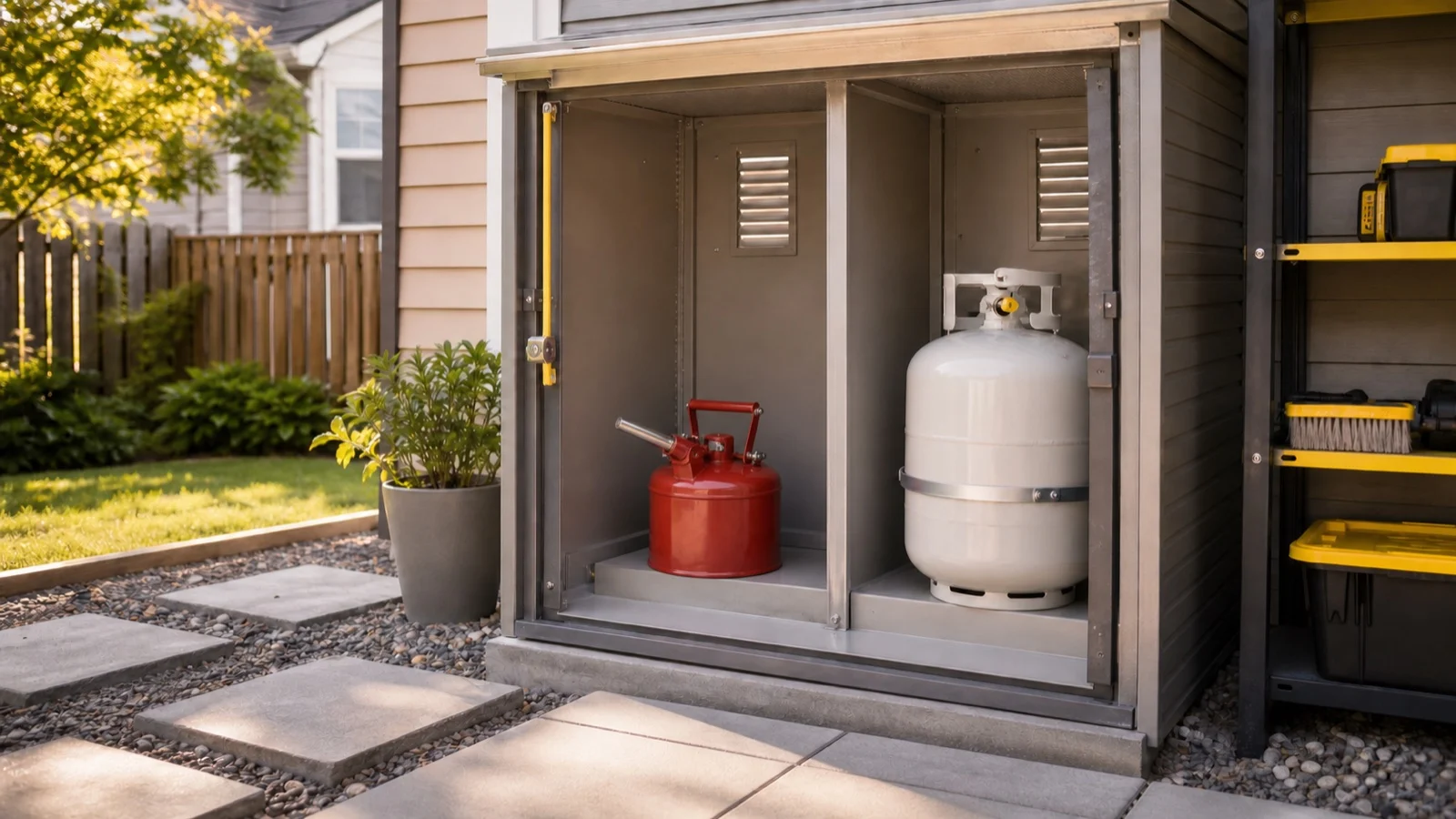
Fuel gives a portable generator its independence from the grid, but it also creates the part of an outage plan that deserves the most care. Gasoline vapors ignite easily, propane remains pressurized even when a cylinder seems empty, and both fuels need storage locations that keep them away from living spaces, heat, sparks, and children.
Quick answer: Store only a practical amount of fuel in approved, tightly closed containers outside the living area. Keep gasoline in a cool, well-ventilated detached location away from ignition sources. Keep propane cylinders upright, outdoors, and protected from impact and excessive heat. Local fire codes, insurance rules, and fuel limits vary, so check local requirements before building a large reserve.
Why Home Fuel Storage Requires a Real Plan
Emergency fuel is not ordinary pantry inventory. Gasoline continuously gives off flammable vapor, and that vapor can travel until it reaches a pilot light, switch, motor, or other ignition source. Propane is stored as a liquid under pressure; a leak expands into gas and can collect in low or enclosed areas.
The goal is not to hoard the largest volume you can fit. It is to store enough fuel to cover a defined load and outage window, then rotate it before quality becomes questionable. Start with the appliances you intend to run, estimate their load with the generator size calculator, and estimate consumption with the fuel runtime calculator. Those numbers produce a much safer and more useful fuel target than guessing.
Choose the Right Gasoline Container
Use a portable fuel container made for gasoline, never a drink bottle, bucket, glass jar, or improvised jug. The U.S. Consumer Product Safety Commission recommends child-resistant containers and warns against storing gasoline inside a house, basement, or near ignition sources. Modern portable containers should include flame-mitigation features intended to reduce the chance of flame traveling back into the container.
For homeowners who handle fuel regularly, a metal safety can is a worthwhile upgrade. A Justrite Type I steel safety can, for example, uses a self-closing lid, pressure-relief design, and flame arrester. Similar five-gallon metal gasoline safety cans are available on Amazon. Confirm the approvals, capacity, and spout design rather than shopping by color alone.
Fill containers on the ground, not in a vehicle bed or trunk, and leave the cap secured immediately after filling. Wipe off drips before transport. Never leave a gasoline container in a vehicle after the trip home; a closed vehicle can become extremely hot and can trap vapor.
Where Gasoline Should Be Stored
The safest practical location is a cool, dry, well-ventilated detached shed or purpose-built storage area away from the house and away from anything that can spark or burn. Do not store gasoline in a basement, utility room, attached living space, or near a furnace, water heater, battery charger, power tool, or generator.
- Keep containers upright on a stable, protected surface.
- Protect them from direct sun, rain, standing water, and vehicle impact.
- Keep fuel inaccessible to children and pets.
- Do not block vents in a storage cabinet or shed.
- Keep the generator itself cool before refueling.
Residential storage limits differ by jurisdiction, and an attached garage may be treated differently from a detached structure. Ask your local fire department or code office before storing more than a few portable containers. The answer may also affect your homeowners insurance.
How Long Gasoline Lasts
Gasoline begins changing as volatile components evaporate and oxidation occurs. Heat, air space, moisture, and ethanol content all influence how quickly quality declines, so there is no honest universal expiration date. Buy fresh fuel from a busy station, date every container, keep it tightly sealed, and rotate it through compatible outdoor equipment or a vehicle according to the equipment and fuel-maker instructions.
A fuel stabilizer can slow degradation, but it cannot restore fuel that has already gone stale or absorbed water. Add stabilizer to fresh fuel in the ratio on the label, then run treated fuel through the generator long enough to reach the fuel system if the manufacturer recommends storage with treated fuel. Always follow the generator manual; some manufacturers instead specify draining the carburetor and fuel system for storage.
Propane Cylinder Storage Is Different
Propane avoids gasoline’s stale-fuel and carburetor problems, which is one reason dual-fuel generators are attractive. It is not risk-free. Store portable propane cylinders outdoors, upright, with the valve closed and the protective features intact. Keep them away from doors, windows, vents, ignition sources, and excessive heat, and secure them so they cannot fall or be struck.
Never store a spare cylinder in a basement or enclosed living area. Do not keep it beneath or beside an operating grill or generator. The Propane Education & Research Council advises leaving the area and contacting emergency services if you smell propane, hear hissing, see a vapor cloud, or find flames at a cylinder. Do not try to solve a significant leak with a wrench and optimism.
Transport cylinders upright with the valve closed, secure them against movement, and unload them promptly. A standard 20-pound cylinder can provide useful generator runtime, but the actual result depends on generator output and load. Our guide to propane consumption explains why nameplate wattage alone does not predict fuel use.
Build a Fuel Rotation and Inspection Routine
Once a month during outage season, inspect containers for rust, swelling, cracked seals, damaged valves, fuel odor, or moisture. Make sure labels remain readable and the storage area has not accumulated cardboard, oily rags, fertilizer, paint, or other combustibles. Record the purchase month on gasoline and the refill or exchange date on propane.
Test the generator on a schedule recommended by its manufacturer, but do it outdoors and under a controlled load. A generator that has not been started in two years is not a backup plan; it is an unanswered question. Testing also lets you verify cords, transfer equipment, CO alarms, and the household procedure described in our outage planning guide.
Fuel Storage Mistakes to Avoid
- Storing gasoline in the house, basement, or beside a fuel-burning appliance.
- Keeping propane cylinders on their side or inside an enclosed space.
- Using unapproved containers or containers with damaged caps and valves.
- Refueling a hot or running generator.
- Running a generator in a garage, shed, porch, or near doors and windows.
- Buying more fuel than the household can safely rotate and store.
Generator exhaust is a separate hazard from stored fuel. The CPSC says portable generators should be operated outdoors at least 20 feet from the home, with exhaust directed away from the building. Install working carbon-monoxide alarms on every level and outside sleeping areas.
A Practical Home Fuel Checklist
- Calculate the loads and runtime you actually need.
- Choose approved containers sized so one person can safely lift and pour them.
- Select an outdoor or detached, ventilated storage location.
- Confirm local quantity limits and insurance requirements.
- Date, inspect, and rotate gasoline on a written schedule.
- Keep propane upright, closed, secured, and away from heat.
- Test the generator and CO alarms before storm season.
Stored fuel should reduce uncertainty, not move the danger closer to your family. A modest, well-maintained reserve paired with a realistic load plan is more valuable than a large pile of aging containers you cannot safely manage.