

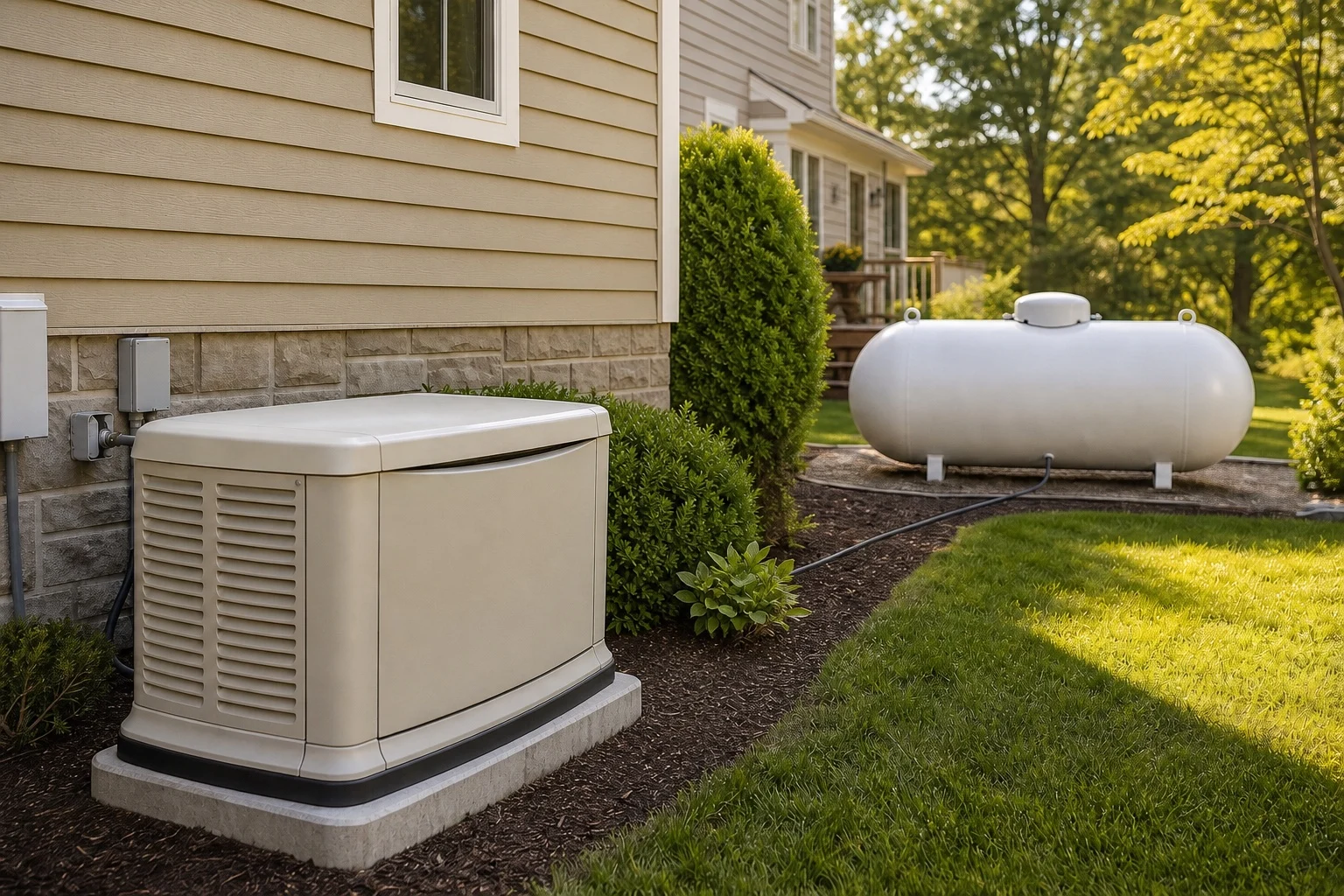
A propane standby generator can keep a home operating through a long outage, but only while the tank can supply enough fuel. Consumption varies substantially with generator size, electrical load, weather, engine condition, and the appliances cycling on and off.
The most reliable estimate comes from the fuel-consumption table for the exact generator model. Use that number with the propane supplier’s confirmed usable tank capacity, then preserve a reserve instead of planning to consume every available gallon.
Quick answer: Many residential standby generators use roughly 1 to 4 gallons of propane per hour, depending on generator size and load. A smaller unit at half load may stay near the low end, while a 20-plus-kilowatt generator near full output can approach the high end.
How Much Propane Does a Standby Generator Use Per Hour?
Manufacturer data illustrates why one universal number is not useful. Generac’s published specifications show a 10-kilowatt unit using about 0.97 gallon per hour at half load and 1.48 gallons per hour at full load. Its 14- and 18-kilowatt models are around 1.7 to 1.8 gallons per hour at half load and about 3 gallons per hour at full load. A current 22-kilowatt model lists approximately 2.53 gallons per hour at half load and 3.71 gallons per hour at full load.
| Example generator size | Approx. propane at 50% load | Approx. propane at 100% load |
|---|---|---|
| 10 kW | 0.97 gal/hr | 1.48 gal/hr |
| 14 kW | 1.81 gal/hr | 3.07 gal/hr |
| 18 kW | 1.70 gal/hr | 3.02 gal/hr |
| 22 kW | 2.53 gal/hr | 3.71 gal/hr |
These figures are planning examples, not substitutes for the specification sheet. The 10-, 14-, and 18-kilowatt values come from Generac’s Guardian Series specifications; the 22-kilowatt values come from the current Generac 22 kW product page. Other brands and models will differ.
Why Electrical Load Changes Propane Consumption
A generator does not consume fuel in direct proportion to the number of appliances running. The engine must remain operating even at a light load, so fuel use does not fall to zero when demand is low. As larger loads switch on, the engine works harder and consumption rises.
This makes load management valuable. Avoid running electric water heating, clothes drying, cooking, and central air conditioning simultaneously unless the system was designed for it. Prioritizing the essential circuits worth backing up first can extend runtime without sacrificing the services that protect the home.
How Long Will a Propane Tank Run a Standby Generator?
Use the usable gallons confirmed by the propane supplier, not only the nominal tank label. Then divide usable gallons by the estimated hourly consumption.
Estimated runtime in hours = usable propane gallons / gallons used per hour
If a supplier confirms that 400 gallons are available for generator use and the expected average consumption is 2 gallons per hour, the simple estimate is 200 operating hours. That is about 8.3 days of continuous operation. Real runtime may be lower because load changes, cold weather, maintenance condition, and tank vaporization all affect performance.
Use the fuel runtime calculator to compare load, consumption, and reserve scenarios without doing the arithmetic repeatedly.
What Size Propane Tank Is Practical?
The right tank depends on outage risk, generator size, space, local requirements, and how quickly propane can be delivered after a storm. A home using propane for heating, hot water, or cooking must also reserve fuel for those systems. The generator is not the only draw on the tank.
Ask the installer and propane supplier to estimate winter demand, usable capacity, minimum delivery amount, and the longest realistic time between deliveries. A remote tank monitor can make planning easier; compare remote propane tank gauges on Amazon, then confirm compatibility with the tank and supplier.
Weather and Tank Vaporization Affect Runtime
Liquid propane must vaporize before the generator can use it. Low temperatures, a low fuel level, and sustained high demand can reduce the tank’s ability to provide vapor fast enough. A tank may contain fuel yet struggle to support the required flow under severe conditions.
This is a sizing issue for the propane professional, not just a runtime calculation. Tank dimensions, fill level, regulator selection, piping, pressure, distance, and local design temperature all matter. Do not substitute a smaller cylinder or improvised connection for the installed fuel system.
Ways to Reduce Propane Use During an Outage
- Use load-shedding controls or manually stagger large appliances.
- Run only the heating or cooling needed to keep one area safe.
- Keep refrigerators and freezers closed so compressors cycle less often.
- Charge batteries and portable power stations while the generator is already running, then use quiet battery power for small overnight loads.
- Maintain the generator so filters, plugs, oil, and battery condition do not compromise operation.
A hybrid plan can be efficient: the standby generator handles large loads and recharging, while a battery carries routers, lights, electronics, and other low-power loads during quiet periods. The battery runtime calculator can help size that portion of the plan.
Propane Generator Safety and Maintenance
A permanently installed standby generator should be placed, connected, and commissioned according to the manufacturer’s instructions, local code, and permit requirements. Keep required clearances open, never block airflow, and schedule maintenance based on operating hours as well as calendar time.
Install carbon monoxide alarms and test them regularly. A battery-backup carbon monoxide alarm remains useful when household power is unstable. Store portable cylinders and handle propane according to supplier and fire-code guidance; our fuel storage safety guide covers the broader basics.
Plan a Fuel Reserve, Not a Perfect Forecast
Fuel-use estimates are ranges. Build a plan around the exact generator model, the actual essential load, and confirmed tank capacity. Then leave room for colder weather, heavier demand, delayed deliveries, and the other propane appliances in the home.
If the system has not been selected yet, start with the generator size calculator and the guide to choosing the right generator for your home. Oversizing can increase purchase cost and light-load fuel use, while undersizing can lead to overloads and poor performance.
Frequently Asked Questions
Does a standby generator use propane when nothing is running?
Yes. The engine consumes fuel whenever it operates, even at a very light electrical load. Consumption rises as the connected load increases.
Can I calculate runtime from the tank’s nominal size?
Not accurately. Ask the supplier how many usable gallons are available and whether other appliances share the tank. Preserve a reserve rather than planning to empty it.
Will a larger generator always use more propane?
Generally, a larger engine has greater fuel demand, but load and model efficiency also matter. Compare manufacturer fuel tables at similar load percentages.