

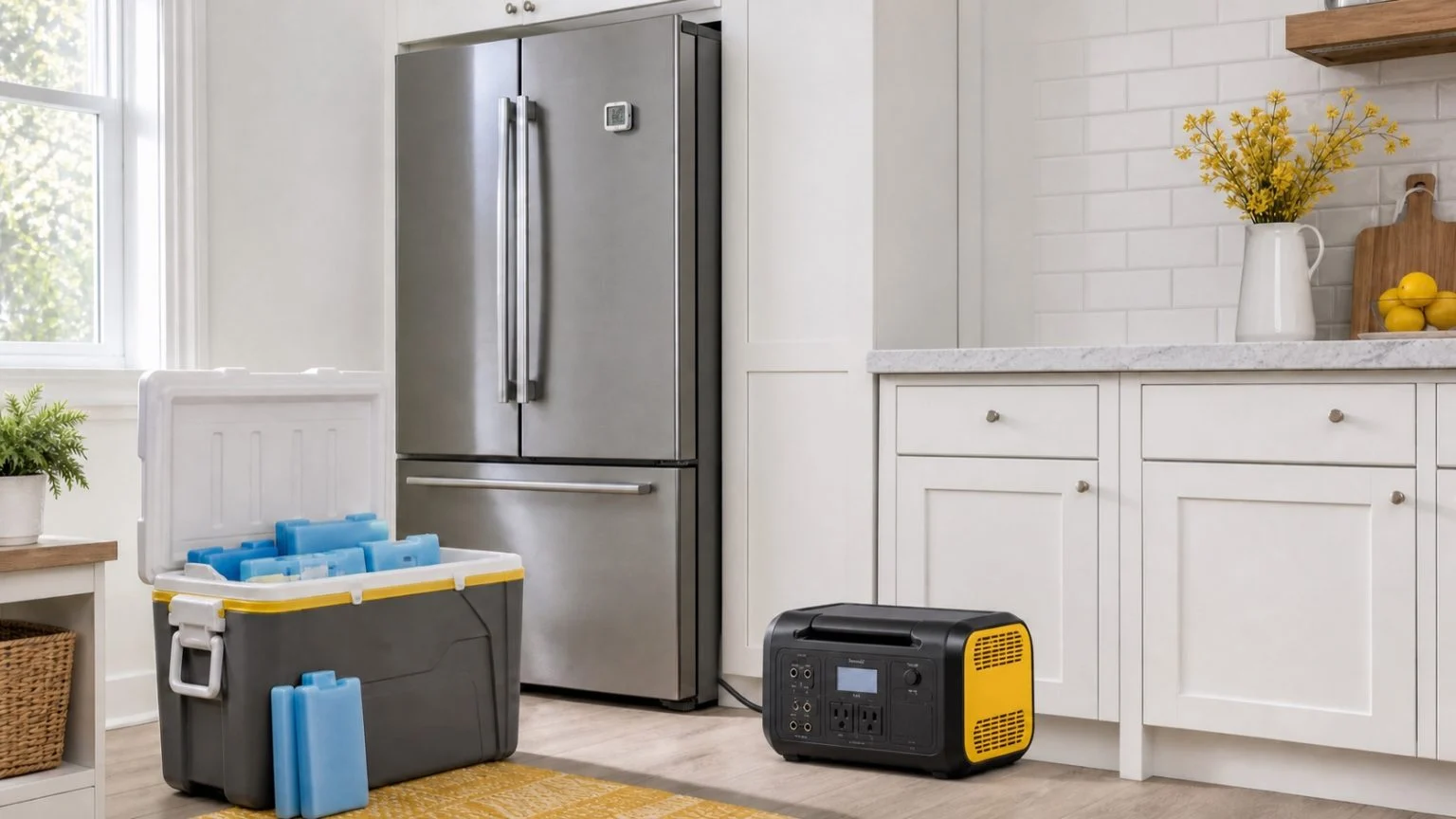
A refrigerator full of food can represent hundreds of dollars, but food safety during an outage is governed by temperature and time, not by whether something still smells normal. The most useful preparation is simple: know the safe temperature limits, keep the doors closed, and have a backup cooling or power plan before the clock starts.
Quick answer: According to CDC food-safety guidance, an unopened refrigerator keeps food safe for about four hours. A full freezer can hold a safe temperature for about 48 hours, while a half-full freezer is closer to 24 hours. Refrigerators should be at 40°F or below and freezers at 0°F or below before the outage.
The Four Numbers to Remember
- 40°F: the maximum safe refrigerator temperature.
- 0°F: the recommended freezer temperature before an outage.
- 4 hours: the approximate safe window for an unopened refrigerator without power.
- 48 or 24 hours: the approximate window for a full or half-full unopened freezer.
These are planning limits, not guarantees. A warm kitchen, frequent door openings, a poorly sealed appliance, or food that was already too warm can shorten the window. Put an appliance thermometer in both compartments now. A basic model is inexpensive; the ThermoWorks RT8100 fridge/freezer thermometer monitors two zones, while refrigerator and freezer alarm thermometers on Amazon offer several simpler options.
What to Do Before an Outage
Preparation creates thermal mass and gives you options. Freeze containers of water and reusable gel packs, leaving expansion room in water containers. Group frozen food together instead of spreading it across mostly empty shelves. A full freezer holds temperature longer because the frozen contents help cool one another.
Keep one or two coolers clean and accessible. If a storm is forecast, lower the appliance settings temporarily without freezing refrigerated food, move items you will not need soon into the freezer, and make ice. Know where block ice or dry ice is sold locally. Never handle dry ice with bare hands, and provide ventilation because sublimating carbon dioxide can displace air in an enclosed space.
Add cold storage to your broader home outage plan. Decide in advance which foods you will move first, where the cooler will sit, and who will monitor temperatures.
During the Outage: Keep the Doors Closed
Every inspection dumps cold air and replaces it with warm, humid room air. Put a note on the doors if necessary. Use a written inventory or a phone photo taken before the outage so family members do not browse with the door open.
If power has been out for four hours and a refrigerator has no alternate cold source, move priority perishables to a cooler packed with ice or frozen gel packs. Keep the cooler at 40°F or below and check it with a thermometer. Do not place warm drinks or room-temperature groceries into the emergency cooler; they consume the cold reserve you are trying to protect.
Can a Portable Power Station Run a Refrigerator?
Usually, yes, if the power station can handle both the refrigerator’s running watts and compressor startup surge. The harder question is runtime. A refrigerator cycles rather than drawing its rated power continuously, so real consumption depends on room temperature, appliance efficiency, door openings, defrost cycles, and compressor behavior. For capacity ranges, surge guidance, and worked runtime examples, see what size portable power station you need to run a refrigerator.
Measure energy use with a plug-in watt meter during normal operation when possible. Then enter a realistic average load into the battery runtime calculator. A 1,024Wh power station does not deliver every advertised watt-hour to the appliance; inverter losses and battery reserve reduce usable energy. Our battery runtime guide explains the math.
A current example such as the EcoFlow DELTA 3 Plus combines 1,024Wh of capacity with 1,800W of AC output, enough output for many household refrigerators. Capacity expansion matters more than headline output for a long outage. You can also compare EcoFlow DELTA 3 Plus configurations on Amazon. Verify your own appliance load before buying.
Generator Backup for Refrigerators and Freezers
A portable generator can support multiple cold appliances for as long as fuel is available, but it adds noise, maintenance, cords, weather exposure, and carbon-monoxide risk. Use the generator size calculator to account for the starting surge of every compressor that might start at the same time.
Operate a generator outdoors only. The CPSC recommends at least 20 feet from the home with exhaust pointed away from doors, windows, vents, and other buildings. Never run one in a garage, shed, porch, or attached carport, even with doors open. Use cords rated for the load and outdoor conditions, or have an electrician install approved transfer equipment.
You do not necessarily need to run the generator continuously. Some households cool appliances in planned cycles, then shut the generator down and keep doors closed. That approach requires thermometer checks and a clear procedure; do not assume a fixed schedule works for every refrigerator.
What Food Should Be Kept or Discarded?
After four hours without refrigeration or another cold source, FoodSafety.gov says to discard perishable refrigerated foods such as meat, poultry, seafood, eggs, milk, and leftovers. Never taste food to decide whether it is safe. Harmful bacteria do not reliably announce themselves through smell or appearance.
Frozen food can often be refrozen or cooked if it still contains ice crystals or is 40°F or below, although texture may decline. Ice cream and frozen yogurt should be discarded once thawed. Hard cheeses, butter, uncut fruit, pickles, mustard, and some other foods may remain safe longer than meat or dairy, but evaluate each item using the official FoodSafety.gov power-outage chart.
Build a Layered Cold-Storage Plan
The strongest plan does not depend on one device. Start with closed doors and thermal mass, then use coolers and ice, then add battery or generator power according to the expected outage length. A portable power station is quiet and usable indoors; a generator offers longer operation with fuel but must remain outdoors. Larger home battery systems can automate backup for selected circuits but require a much larger budget.
- Install thermometers and record normal appliance temperatures.
- Freeze water containers and gel packs before storm season.
- Keep coolers ready and identify local ice sources.
- Measure refrigerator and freezer energy use.
- Test the chosen backup source under real load.
- Keep the official food-safety chart available offline.
Final Refrigerator and Freezer Checklist
When the power fails, note the time, keep the doors shut, and verify temperatures rather than guessing. Move perishables to ice after the refrigerator’s safe window, monitor any backup power source, and discard questionable food without tasting it. A thermometer, a few frozen water containers, and a tested backup-power plan cost far less than replacing a freezer full of food or recovering from foodborne illness.